Saturday, January 3, 2015
Joe Cocker RIP
Joe Cocker died two weeks ago. A great performer who looked past it before he ever got there. There is a certain irony about him. His most famous and successful song "You Are So Beautiful" was also his worst. It was one of those 1970's syrupy love songs that belied Cocker's image as a hard drinking, hard living old time rock and roller. He sang some great tunes. My favorite was "High Time We Went."
A close second was "Feeling All Right."
Say what you will about Joe, he did not spend a lot of money on a tailor. That jacket looks like it was cut from a curtain in a 1970's cocaine den in the East Side Village. Regardless, he made a handsome living singing other people's songs and did it in a way that you had to call him unique. When I first saw him, I thought he had cerebral palsy but the schtick worked. It's bought to categorize him but the best I can come up with is a combination of Big Joe Turner and Bob Dylan. He always reminded me of a coal miner who left work at 5, got totally ripped in a local gin joint, and then jumped on the stage and sang. I guess if Charles Bronson were a singer, he would be Joe Cocker. RIP to great one.


Tuesday, December 2, 2014
McSorley's Old Ale House
I was in New York City last weekend. Always a great place to visit and not for the reasons you think. There is great theater, music, and all the well known cultural attractions. After doing the ritual tourist stuff on Thursday, Friday, and Saturday, my girlfriend and I decided to spend Sunday on the cheap. We had lunch in Little Italy. More specifically, Casa Bella on Mulberry Street. Mussels with garlic as an appetizer. I had pasta bolognese and my girlfriend had Chicken francais or something like that. The damage: $33.00. I tipped the waiter $10. The total was about 50% of what I tipped the waiter at TAO the night before. It was the best meal I had during my stay. Now onto the Main Event. For you serious drinkers who frequently go to Manhattan, you need no introduction. But for the younger crowd whose livers are healthy and still their own and who believe that Sundays were not invented for religious observance but for quaffing ale at the neighborhood gin mill, might I introduce you to McSorley's Old Ale House:
 Founded in 1840, it has not changed much. They offer two beverages: dark and light ale. You can eat crackers and cheese, chili, a ham and cheese sandwich, and not much else. But then again, why would you want to?


 You really feel like you stepped into a time tunnel and are 180 years behind the curve. Sawdust on the floor and a lot of time to kill. The prices are not bad either. Eight glasses of ale for a total of $16.00. Here is an article that appeared in the New Yorker circa 1913.
  It was old even then. But if you are in New York and want to go Old School, I can recommend no better place.


Saturday, July 5, 2014
Razor Blades
Like 99% of men in this country, I hate shaving. Granted, with the iPod, it is a bit more tolerable as I can listen to my favorite podcasts. I use the top of the line products which means Schick Quattro or Gillette Fusion. Both great razors.

 What makes the practice more miserable is the cost of the blades. You pay a very reasonable price for the actual razor. But then you get gauged on the razors themselves. I think I pay $4.00 per razor. I use one a week. So it gets expensive. I can afford it but it is a thorn in my side. Sort of like getting hit up for a $7.00 bottle of cold water on the golf course as you finish your first nine. You pay it but it ain't fun.
Now, thanks to the wonders of EBay, this economic irritant need not exist. I bought this plastic strip 3 months ago after looking for some cheaper blades. For the price, it was worth wasting the risk that it was not what it promised.
What makes the practice more miserable is the cost of the blades. You pay a very reasonable price for the actual razor. But then you get gauged on the razors themselves. I think I pay $4.00 per razor. I use one a week. So it gets expensive. I can afford it but it is a thorn in my side. Sort of like getting hit up for a $7.00 bottle of cold water on the golf course as you finish your first nine. You pay it but it ain't fun.
Now, thanks to the wonders of EBay, this economic irritant need not exist. I bought this plastic strip 3 months ago after looking for some cheaper blades. For the price, it was worth wasting the risk that it was not what it promised. This nondescript plastic/rubber strip is nothing short of a miracle. You simply wet a blade and move it ten times across the strip in the opposite direction that you shave. Do this once a week. I have now been using the same blade for 14 weeks! Each shave is the equivalent of using a new blade. Here is the link on e bay.
You would think they would market this and put the behemoths of shaving out of business.
This nondescript plastic/rubber strip is nothing short of a miracle. You simply wet a blade and move it ten times across the strip in the opposite direction that you shave. Do this once a week. I have now been using the same blade for 14 weeks! Each shave is the equivalent of using a new blade. Here is the link on e bay.
You would think they would market this and put the behemoths of shaving out of business.


Sunday, November 10, 2013
LBJ GOES POSTAL
I was always fascinated by the Kennedy assassination. Not so much the fact that it happened but the myriad conspiracy theories that proliferated afterwards that are themselves a reflection of a very odd strain in the American psyche. The best counter to the Warren Commission findings is Henry Hurt's Reasonable Doubt.
  There are countless other tombs that pin the blame on some dark conspiracy deep inside the CIA, mafia, Castro, Miami exiles, or a combination of the above. There is no credible evidence for any of this conjecture but let's face it, it makes great reading. You get the impression that regardless of the evidence, these wild tales would have surfaced anyway. Now, on the heels of the 50th anniversary of the greatest crime of the century, comes Roger Stone, a former Republican operative and opportunist, to offer up a laughingly implausible scenario: it was all the work of that paragon of political virtue Lyndon Baines Johnson.
  I first heard of this book on the Lew Rockwell show and then listened to Dick Morris interview Stone on his radio show. My first reaction was laughter. I started reading about LBJ in the late 70's and have never stopped. The Robert Caro biography is excellent and one sees how the Kennedy clan treated him. Johnson was a brilliant and cunning politician. He was crass, corrupt, and power hungry. And like JFK, he loved the ladies although not a reckless sociopath about it. I always thought that if he could wish JFK dead without having to dirty his hands, he would do it in an heartbeat. Not so much because he hated the liberal saint, but because it would be a means to eliminating the power and influence of his real arch enemy: RFK.
 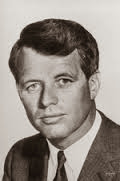 But this is all conjecture. Which is a lot more than Stone has going for him. Granted, I have not yet read the book, although it is now in my Kindle and I soon will. But the thought of Johnson conspiring to murder Kennedy is preposterous. Big time. The only evidence that Stone has to launch this piece of a grotesque hypothesis is a supposed conversation he had with Nixon sometime in the 1970's when Nixon allegedly said that the difference between him and LBJ was that LBJ was willing to kill to become president.
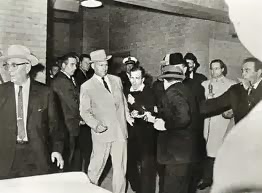
 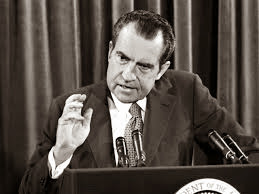 That Nixon ever made this statement is highly dubious. Then there is the fact that LBJ hired Jack Ruby to do some political work for him in the 1940's and that Nixon supposedly said upon seeing Ruby kill Oswald, "I know that guy."
  So what? Like all Kennedy assassination theories, the truth is irrelevant. They reveal a bizarre strand in American political thought where there is almost a religious like belief that we are governed by an all powerful cabal of government/financial/military elites. Elections are all smoke and mirrors to reassure the masses that their preferences are validated at the voting booth. And no political persuasion has a monopoly on this political hallucination. Now I am off to spend Sunday reading the actual book. It either that or watch a rerun of The Wizard Of Oz.
  I would rather read a book that has less relation to reality.



Sunday, December 9, 2012
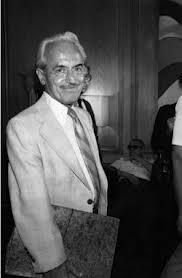
Marvin Miller, RIP
Sunday, April 1, 2012
Mad Men Season Five

Mad Men is one of the best shows on TV. It captures the essence of an era that was known for its male centric culture and hard living ethos. Think JFK meets Dean Martin all wrapped up in the veneer of Father Knows Best.


Like all good lies, it works for a while only to be done in eventually by the truth. Then instead of living a secret life, you find your deceit exposed for all to witness until you begin to hate yourself for having done it all to begin with. And to make matters worse, society's moral capital that you exploited perfectly to shield your chicanery from family and co-workers has been spent by you and millions like you to the point where your immorality has become almost pedestrian. What you used to do discreetly in a hotel room circa 1961 while sipping a martini is now plastered on every billboard and movie theater in Manhattan circa 1967. Sin is fun when it is restricted to those who have the good sense to exercise discretion but it becomes rather corrosive and corrupting when everyone else gets the hang of it.
This may all be fancy social theorizing but I think it is the direction Mad Men is taking. I started to watch the first episode last Sunday night. Funny, I had never watched it on TV and never will again. I have the DVD's and loved them without the commercials. I turned off the show after 40 minutes out of sheer boredom. The next morning, figuring I was too drunk and tired to perhaps appreciate the nuances of the show, I purchased the entire season on Itunes which will nicely be downloaded into my account after each episode airs. I watched Sunday night's premier last night and must say, my initial instinct was wrong. Contrary to many reviews, it was not boring at all. There were no blockbuster moments but the foundation has been laid for some great story lines. Here is what to expect in the next eleven episodes based on what I divined. Keep in mind that these are the prognostications of merely someone who made the mistake in life of going to law school instead of writing novels and movie scripts.
Don Draper. He turned 40 (plus six months). He will begin having an affair on his second wife. His very quick marriage to her was pure infatuation. He never loved her, something she at least shares with his first wife. You can see the seeds of his dissatisfaction by his reaction to the surprise birthday party and risque dance she performed in front of his co-workers. He has no respect for her. She exists only to the extent that she complements the image he wants to portray to the outside world. But then again, what second wife doesn't?
 More telling was his making love to her while she cleaned his apartment in her panties and bra. The purpose of that scene was not to highlight his prurient lust for her. What I saw were two things that spell big league trouble for any women: cellulite and sagging boobs. For a man, they can be replaced very fast. No different from getting rid of the rust on that '61 Cadillac by buying a '66 Continental. She will start nagging him mercilessly for material things. He will unceremoniously dump her. Expect her demise to be coupled with a crisis in the office as she diverts his attention from his responsibilities to his clients. But there will be one big twist.
Megan. She fits the stereotype of the middle aged man's second wife too perfectly. Call it a trophy wife, arm candy, or an antidote to a first wife who made love like a wet dish rag.
 The message is clear: your days are numbered sweetheart so start preparing for the downfall. And how does the ideal second wife do this? Simple. The same way Jane Greer tried to keep Robert Mitchum on her side in Out Of The Past: blackmail. Employ the Black Arts to get your way. There are two scenes that open the door to this angle. At the party, one of Megan's girlfriends alluded to her past as an actress. Megan replied that she was not successful at it. To the untrained ear and eye, this may have been meaningless. But it was not. It Manhattan, there is a time honored occupation for wannabe actresses and models and it ain't waiting on tables. Second, she apparently knows of Don's dual identity. Huge mistake on his part in telling her this secret. Here is how this will play out: Don will find out about her past. He really won't care but will use it as a convenient excuse to give her her walking papers or to just let him do whatever he wants. She will become, for him, well, what she used to be: a lady of the evening. But she will then play the trump card of all trump cards: what is good for the goose is good for the gander. He may have relieved himself of financially underwriting the real Mrs. Draper in California but now he will inherit an even bigger problem. And the lovely Megan will not be so accommodating. Like all gifted gold diggers and blackmailers, she will up the ante and push Don to his limits. Expect some big fireworks here.
Roger and Joan. There is a temptation to write him off, the victim of a heart attack.
 His role in the agency is becoming increasingly irrelevant. After all, he is only there because his father owned the agency with the eccentric Burt Cooper, another old fart who serves no useful purpose. But they own a majority of the agency so their weight is not that dead. But Roger adds biting humor that would be sorely missed. His one liners and even by 1960's standards, political incorrectness, are quite entertaining. And after all, getting drunk with potential clients to keep them loose is an underrated art.
 He hangs around while fending off the backstabbing Pete. He is also the father to Joan's son. Expect her to dump this news on him when she divorces her husband.
 There is no way she is going to be content commuting every day from Fort Dix while married to a doctor who spends his days treating GI's for gonorrhea and syphilis in some desolate Quonset hut in the pine barrens. At some point, Roger will dump his airhead wife and move in with Joan.
 Lane Pryce. I like this character.
 A very unhappy and complex man who is weak and compassionate. We learn that he is struggling financially and has shown a too eager willingness to hire Joan back and to get on her good side. There has to be an ulterior motive at least subconsciously. His money worries will get the better of him and he will start embezzling from the firm and expect Joan to cover for him. This will all blow up by the end of the season.
Pete Campbell. Not a likable guy but works hard and does put money in other people's pockets. He will give the partners an ultimatum: make him partner or else he goes. They will relent but it will be ugly.
Peggy Olson. I never liked the character. So I have no predictions other than that she will keep getting old.
Betty. A no show so far. She will divorce Henry Francis but not before having an affair with her ex husband. I predict she dies after going psycho. Maybe she burns down the house and takes herself along for the ride. She is that crazy.
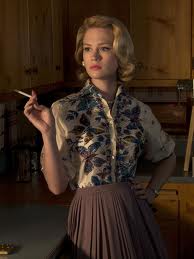
A quick mention of one of my favorite characters: Freddy Rumsen.
 A reformed drinker who never pretended to be anything other than what he was. Worked hard and was responsible for giving Peggy credit for her first big coup: a basket of kisses. Even though he pissed his pants in front of his co-workers, he is my kind of guy.
Sunday, March 25, 2012
La Gloria Cubana R Serie #7


you begin to realize as you mature that the pastimes have many benefits independent from impressing your friends. So now in my mid 50's, I do most of my drinking and smoking alone. And I prefer it that way. As your weaknesses and deficiencies become more difficult to deny and obvious to the naked eye, the only antidote is to go it alone. Self delusion is so easy and comforting. I always entertain myself with a movie or music collection, all pre-1960, to help the charade along. That being said, I think I have found the perfect cigar: the La Gloria Cubana R Serie #7. Large ring, strong flavor, and always fresh. You can buy them at the El Credito Cigar shop on 8th Street downtown.
 I go there once a month to buy a box and always try to grab one piece of apparel. You can watch the old Cuban ladies hand rolling the sticks. What amazes me is that some things never change. We live in a world that is becoming ever more sanitized. The government seems to be regulating and trying to banish every sin that brings a man pleasure. Yet you can watch some 75 year sold woman roll a cigar and then she puts a piece of wrapper on the closed end by licking the cigar and making it stick through her spit.
  I guess they have been doing that for 200 years, the FDA and a hundred other idiotic laws and regulations be damned. So here is a salute to the perfect cigar:

And what better way and time to enjoy. Season Five of Mad Men begins tonight! So pour yourself a Scotch, light up a stogie, and step back in time to an era when all was well in the world.
Saturday, December 17, 2011
Gun Shows and Politics

I like going to gun shows. It is not the guns that interest me. It is the people. I could never understand why the Democratic Party ever embraced gun control as a policy. There is no upside. But there is and has been a huge downside. Want to know why the Democrats lost their grip on white, working class voters south of the Mason Dixon line? No need to read any long winded books and articles employing all sorts of voting data to try and explain electoral behavior. Just go to a gun show. 


The people that attend these events are "regular folks." Basically, working class, middle to lower income, overweight, high school education, very patriotic, and not too sophisticated when it comes to anything. Except guns. Economically, they are probably more in tune with the Democrats. But the gun issue is what makes them vote Republican. That is what Democrats could never figure out: that gun is a symbol of their independence and freedom. In the presidential campaign of 1992, I heard Bill Clinton give a speech where he declared that he would never take people's guns away from them. He said it in a southern drawl. It sounded convincing. I knew then that he would win. Conversely, it is accepted wisdom that a major reason the Republicans won the house in 1994 was the health reform issue. Wrong. As Clinton pointed out in his memoirs, the biggest factor was the assault weapons ban that Congress passed in the summer of 1994. It alienated the very people who would normally vote Democratic except for the gun issue. He was dead on. Democrats have always stereotyped gun owners as being ignorant hayseeds who are too dumb to know what is best for them.

Big mistake. The people at gun shows are racially diverse. But they share a common cultural trait: they have a right to defend themselves and their property free from government harassment. Here is a cheat sheet on the cultural tastes of an average gun show attendee: Dunkin Donuts over Starbucks, Walmart over Bloomingdales, Ford F150 over a Lexus. You get the drift. So if you want to take a peek inside a real slice of Americana, visit a gun show. Chat with the vendors. It is fun.
Sunday, December 11, 2011
Donald Draper For President?


My advice to Romney? Put a Lucky Strike in your left hand and a Scotch in your right, and, voila, you have my vote and that of another 10 million men in America. And as a finishing touch to the makeover, pursue an affair with Sarah Palin in some swanky hotel. Screw the media. It will be a huge plus. It will add a hard edge to your image. Hey, who would you rather have dealing with the dictators of the world: a guy who looks like the figurine on a wedding cake or an incarnation of a 1960's real man? I rest my case.
Sunday, July 31, 2011
Peter Falk/A Woman Under The Influence

My first and lasting memory of him was as a cab driver in the 1963 slapstick "It's A Mad Mad Mad Mad World."

Most people remember him as Colombo, the disheveled TV detective that aired on alternate Sunday nights in the early to mid 70's.

I read many of his obituaries. There was the obligatory Colombo citing. But one columnist wrote of his best performance: A Woman Under The Influence.

I heard of the movie but never watched it. The name alone would have made me turn away. Too much 1970's New Age psycho babble about middle class/feminine dysfunction caused by who else, men. But I checked out some reviews on Netflix and put it on the top of my queue. I watched it last night with my dog and a bottle of wine. In a word, devastating. I cannot get it out of my head. The story is about a working class family whose mother, Gene Rowlands, suffers from some sort of mental illness that affects her family to the point that she must be institutionalized. She has three young children. Her husband, Falk, is a blue collar worker who, from what one gathers, works for a utility repairing broken power lines and the like. It is dangerous work. He is a moral, decent, man, who does his best to deal with something he was never really intellectually equipped to understand.

But he moves on. Like a good father and husband so typical of millions of average men of the era, he did not complain but did what he had to do and asked for nothing in exchange. The movie is made in docudrama mode. Think Curb Your Enthusiasm without the laughs. The cultural backdrop reminded me of The Deer Hunter. The rest is just one depressing thing after another.
But some scenes stand out. At the beginning of the movie, Falk desperately wants to return home from work to be with his wife. He arranges for his children to go to his mother's for the weekend. But he gets called back to work and must deal with another utility emergency. His wife goes out for a drink and meets a bar hanger on and goes back to her house and sleeps with him. Falk returns home later oblivious to the transgression. Almost makes you cry. Later on, Rowlands is watching a friend's children who are playing with her own. The father picks them up and finds the children have created a huge mess in the house. He tries to get his children out of the house and ends up in the bedroom. Falk returns home and discovers the chaos. He sees another man in his house and assumes something that is not true. He slaps his wife across her face. It is all very sad. An honest family man has had his zone of sanctity invaded. And lastly, the children. They will be forever scarred by their mother's illness. I wondered how I would have felt if in the early 60's my mother went off the deep end and my father, a man strikingly similar to Falk's character, had to deal with it. People back then laughed at such things: nut house, funny farm, loony bin. My friends would have ridiculed it and I too if the shoe were on the other foot. But thankfully for me, it was not to be.
So if you want to see another side of Falk, rent this movie. It is worth the two and half hours.
Saturday, July 9, 2011
Dead Or Alive?

Did you ever find out someone you thought was dead is alive? I did this morning. Came across this. I honestly thought Larry Hagman died ten years ago. I am still not convinced he is alive.
Sunday, June 12, 2011
Kelly's, RIP

I was walking around downtown Hollywood last night after dinner and was shocked that Kelly's has closed. The place was a throwback to a time when a bar did what bars do best: serve drinks. One of those places that was serving beer and a shot at 7 am. Nothing fancy. No pretensions. Sure, 99% of the patrons had a monkey on their back and more personal problems than most of us can imagine. But, hey, who ever said life was supposed to be easy.
Monday, May 30, 2011
Memorial Day

As I approach the gates of heaven;
St. Peter I will tell;
One more soldier reporting sir;
I've served my time in hell.
Mark Anthony Gresswell.
Sunday, May 29, 2011
Old Time Rock and Roll and Politically Correct Speech


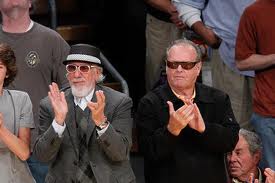
President Obama caught some flak recently for inviting a pop singer to the White House who had either written or sang a song sympathetic to a cop killer. Elites in this country have always scorned the music or movie industry for peddling lyrics that are not in tune with mainstream thinking. Call it a form of censorship but it is a strain in the American experience that will never go away. I recall sometime in 1969 or 70, Spiro Agnew gave a speech that ripped into Easy Rider for its promotion of illicit drug use. That seems rather comical today in that its major protagonist, Jack Nicholson, spends most of his public time sitting with his long time friend Lou Adler courtside at Lakers' games looking a lot more weather beaten than Agnew ever did.
You can fast forward this narrative to Tipper Gore in the late 80's testifying before Congress on the dangers of rap music and then Bill Clinton tearing into Sister Souljah for her lyrics. My daughters, when they were teenagers, had all sorts of racist songs on their Ipods. The infamous "N" word was thrown around like pennies in an arcade. That most of these songs were sung by black performers seemed to make it all acceptable. I have very little knowledge of any of these songs because, thanks to Apple and Itunes, my universe of music begins circa 1900 with Scott Joplin and ends with Robert Palmer's Addicted to Love around 1985. About a week ago, I was listening to my collection of Rolling Stones music and when Brown Sugar was played, it got me to thinking. Even though I have listened to this song at least 500 times, I never did understand the lyrics. As with most songs of the era, that does not matter. You simply interpose your own fantasies into the beat and then enjoy the ride. So I Googled the lyrics and here they are:
Gold coast slave ship bound for cotton fields,
Sold in a market down in new orleans.
Scarred old slaver know he's doin alright.
Hear him whip the women just around midnight.
Ah brown sugar how come you taste so good
(a-ha) brown sugar, just like a young girl should
A-huh.
Drums beating, cold english blood runs hot,
Lady of the house wondrin where it's gonna stop.
House boy knows that he's doin alright.
You should a heard him just around midnight.
Ah brown sugar how come you taste so good
(a-ha) brown sugar, just like a black girl should
A-huh.
I bet your mama was a tent show queen, and all her boy
Friends were sweet sixteen.
Im no schoolboy but I know what I like,
You should have heard me just around midnight.
Ah brown sugar how come you taste so good
(a-ha) brown sugar, just like a young girl should.
I said yeah, I said yeah, I said yeah, I said
Oh just like a, just like a black girl should.
I said yeah, I said yeah, I said yeah, I said
Oh just like, just like a black girl should.
What we have here is a song about a slave trader bringing in a shipment of black women to New Orleans, literally whipping them into shape and then raping them at night in a whorehouse. And this is all supposed to be "just like a black girl should." If that is not enough, fasten your seat belt and check this out:
Gotta love Jagger. It amazes me that this song never was controversial. I guess the Stones could get away with it. Imagine Pat Boone or Loretta Lynn singing this ode. I doubt they would have pulled it off. Looking back at it, I have to congratulate myself. I always thought the self appointed morality police were full of themselves. Their warnings of moral decay were all hot air used to pump up their own political careers. Like the French say, plus ca la change, plus ca la meme chose. The more things change, the more they remain the same.
Saturday, May 14, 2011
IRONY
Irony is the source of humor. It is also provides a lense through which events can be judged in proper perspective. I was reading the Wall Street Journal yesterday (yes, the print version) and could not help but be amazed at this picture and caption.

We have the following:
1. "Accounting for Evil."
2. "28,060 deaths."
3. "helping murder nearly 30,000.00 people."
To which add:
4. "a 5 year sentence" and
5. "He was freed, pending an appeal."
There were more pictures of him in a wheelchair leaving the courthouse which only adds to the spectacle.

I wonder how many people showed up at his "camp" (another grotesque literary misnomer) crippled, maimed, or sick and were shot on sight and then discarded like yesterday's garbage. In any event, if you are going to account for evil, account for evil.
We have the following:
1. "Accounting for Evil."
2. "28,060 deaths."
3. "helping murder nearly 30,000.00 people."
To which add:
4. "a 5 year sentence" and
5. "He was freed, pending an appeal."
There were more pictures of him in a wheelchair leaving the courthouse which only adds to the spectacle.

I wonder how many people showed up at his "camp" (another grotesque literary misnomer) crippled, maimed, or sick and were shot on sight and then discarded like yesterday's garbage. In any event, if you are going to account for evil, account for evil.
Subscribe to:
Posts (Atom)


